“Curix will develop a groundbreaking technology in SEISMIC to temporarily open the blood-brain barrier (BBB) using microbubbles and focused ultrasound (FUS),” said Peter Frinking, managing director at Curix. “This innovation can help overcome a major challenge in brain tumor diagnosis: the difficulty of obtaining tumor-specific markers from the bloodstream. By localized and controlled opening of the BBB, tumor markers enter the bloodstream, enabling minimally invasive liquid biopsies. Through this work, Curix makes an essential contribution to SEISMIC’s ambition to reduce invasive procedures and improve care for patients with neurological disease.”
Innovation through public-private partnership
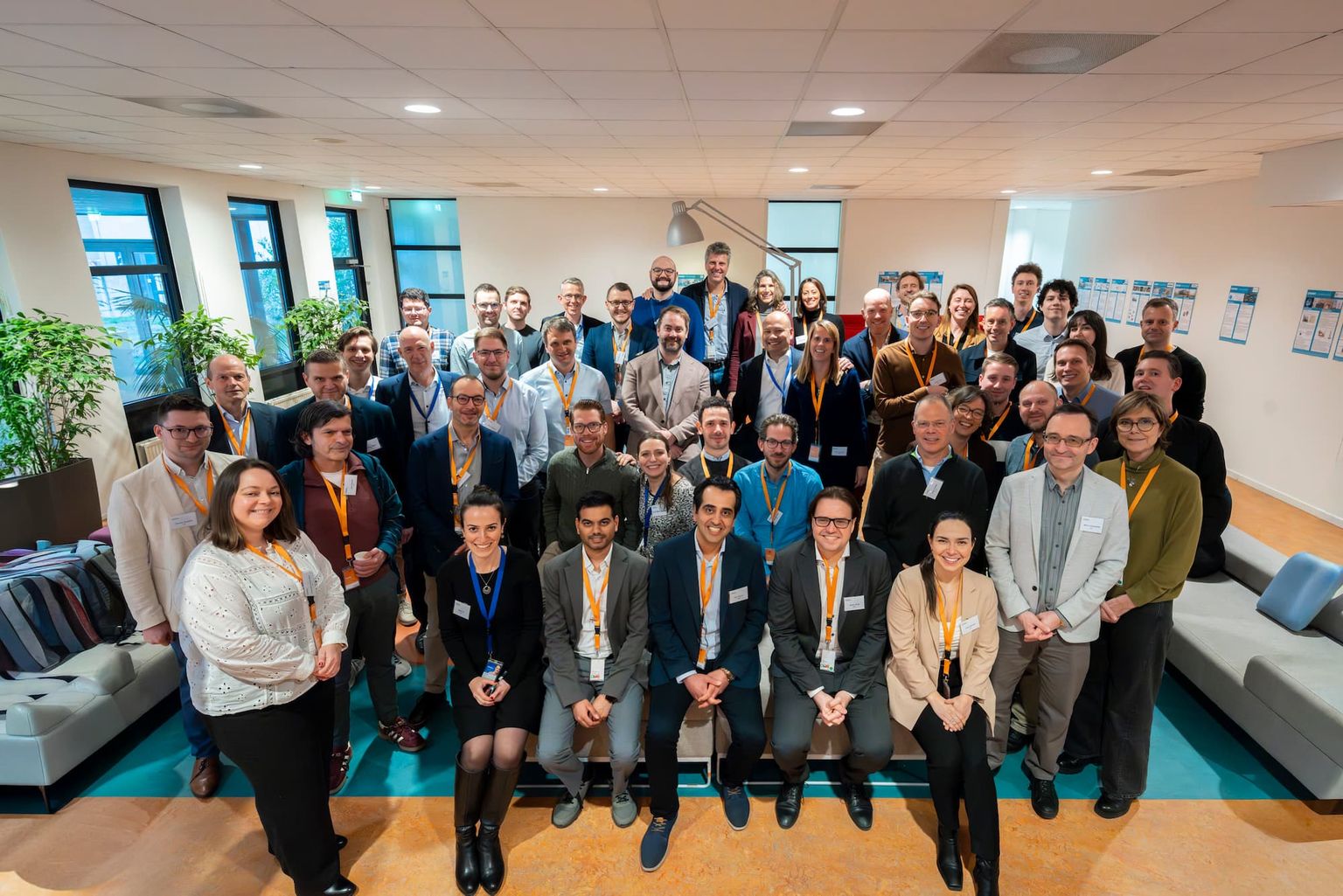
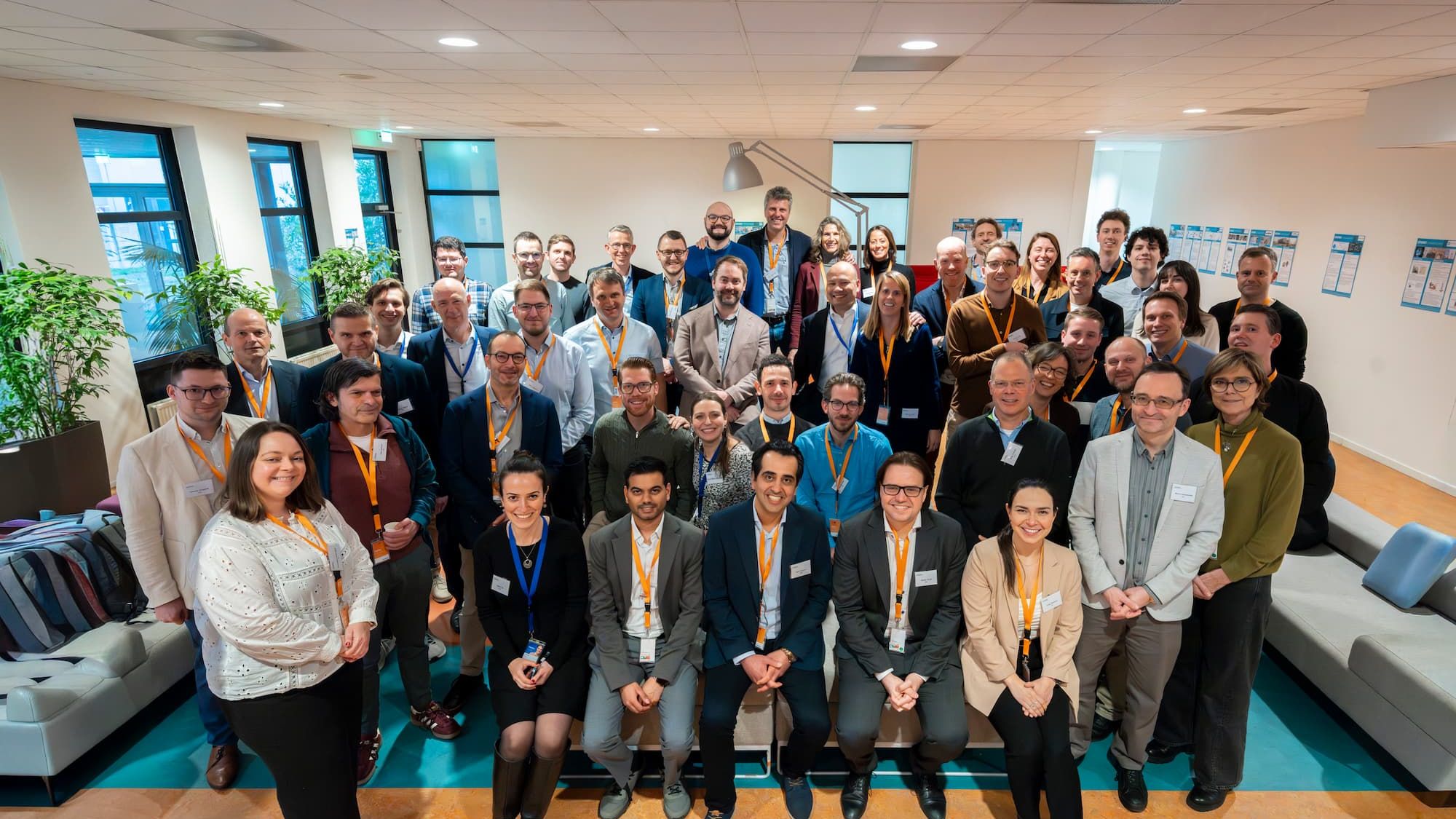
The SEISMIC public-private partnership comprises nine medical technology industry partners, two patient organizations and seven academic partners:
Industry partners: Philips, Oldelft Ultrasound, DEMCON curix, Yaskawa, us4us, Caresyntax, Surgical Science, Boston Scientific, and Bracco.
Patient organizations: Fundacio Ictus (stroke) and Cancer Patients Europe.
Academic partners: Erasmus MC, Erasmus University Rotterdam, University Medical Center Utrecht (UMCU), Radboud University Medical Center (Radboudumc), Hospital Clinic Barcelona (including IDIBAPS), Vall d'Hebron University Hospital, Vall d’Hebron Research Institute (VHIR), and University of Ljubljana.
The burden of neurological conditions and urgent minimally invasive treatment needs
Neurological conditions, including severe conditions such as bleedings deep in the brain (hemorrhagic stroke), chronic bleedings between the skull and the brain (subdural hematoma) and brain tumors are a leading cause of ill health, disability, and overall disease burden globally [1]. Beyond health loss, neurological conditions drive substantial socioeconomic costs, from long-term care and healthcare expenditures to productivity loss and caregiver burden, intensified by population ageing.
While there have been significant advances in the field of neurosurgery, minimally invasive neurosurgical techniques continue to lag significantly behind other surgical disciplines. Current clinical procedures rely on large skull openings, optical and electromagnetic surgical navigation systems based on preoperative imaging, and fragmented intraoperative imaging, which disrupt surgical workflows and compromise precision. The SEISMIC project seeks to transform these potentially high-risk neurosurgical procedures into safer, faster, and more accessible interventions.
SEISMIC will develop an integrated suite of technologies, including real-time surgical navigation that combines ultrasound guidance with live X-ray imaging, highly realistic simulation platforms for clinician training, and minimally invasive biopsy and treatment techniques. SEISMIC will focus on three neurological conditions in which surgery is critical to patient survival and quality of life: intracerebral hemorrhage (bleeding deep within the brain also known as a hemorrhagic stroke), subdural hematoma (bleeding between the skull and the brain), and brain tumors (where surgery is essential for both diagnosis and treatment).
Intracerebral hemorrhage: SEISMIC will explore how real-time ultrasound and X-ray imaging can guide a minimally invasive drainage device through a small skull opening to precisely reach and evacuate deep intracerebral bleeding
Subdural hematoma: The team will investigate a single, image-guided procedure that combines hematoma drainage with embolization of the middle meningeal artery. This approach is important because bleeding recurs in approximately 30% of patients after surgery, and occluding the artery may help prevent recurrence.
Brain tumor diagnosis: This typically requires open brain surgery to obtain a tissue sample for analysis. To reduce the need for surgery, SEISMIC will explore whether diagnostic information can be obtained through minimally invasive, focused ultrasound–enhanced liquid biopsy.
Brain tumor treatment: The team will assess the use of cryoablation—an approach that uses extreme cold to destroy tissue—for the treatment of brain tumors. While cryoablation is already used for other cancers, brain tumors are typically removed via open surgery. In this approach, a cryoablation probe would be introduced through a small skull opening and guided to the tumor using X-ray and ultrasound imaging.
By reducing procedure times, minimizing surgical trauma, and accelerating patient recovery, the SEISMIC project aims to improve clinical outcomes and expand access to specialized neurosurgical care for currently underserved populations.
The SEISMIC website will be live soon: www.seismic-project.eu. The CORDIS project page for SEISMIC can be accessed here. The IHI factsheet for SEISMIC can be found here.
[1] The Lancet Neurology: Global, regional, and national burden of disorders affecting the nervous system, 1990–2021: a systematic analysis for the Global Burden of Disease Study 2021 - https://www.thelancet.com/journals/laneur/article/PIIS1474-4422(24)00038-3/fulltext
This project is supported by the Innovative Health Initiative Joint Undertaking (IHI JU) under grant agreement No 101253085. The JU receives support from the European Union's Horizon Europe research and innovation program and life science industries represented by COCIR, EFPIA, Europa Bío, MedTech Europe and Vaccines Europe. SEISMIC is funded by the European Union, private members, and those contributing partners of the IHI JU. Views and opinions expressed are however those of the author(s) only and do not necessarily reflect those of the aforementioned parties. Neither of the aforementioned parties can be held responsible for them.